
There’s a growing demand for skilled professionals in the cybersecurity field, and understanding the important skills that elevate your career can make all the difference in your professional journey. In this post, we will explore the key competencies that not only enhance your technical abilities but also boost your employability and effectiveness in protecting organizations from cyber threats. By honing these skills, you position yourself as a valuable asset in a rapidly evolving industry that requires both knowledge and adaptability.

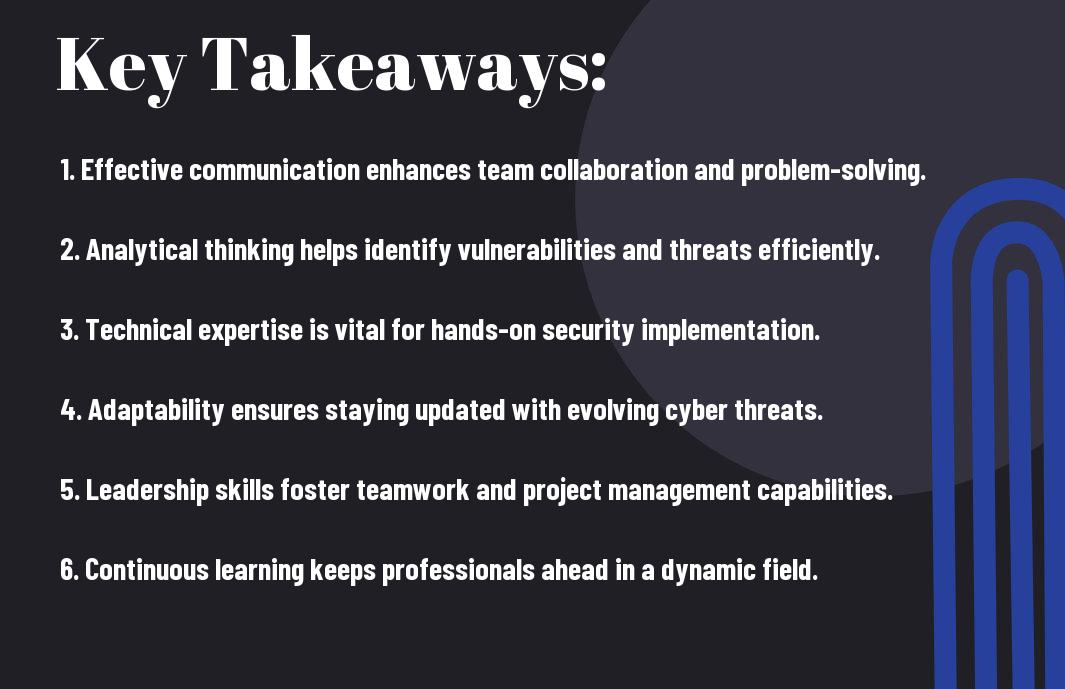
Key Takeaways:
- Technical proficiency in areas such as programming, networking, and system architecture is fundamental in addressing complex security issues.
- Strong analytical and problem-solving abilities enable professionals to identify vulnerabilities and develop effective solutions.
- Communication skills are crucial for articulating security concepts to non-technical stakeholders and fostering a culture of security within an organization.
- Continuous learning and adaptability are vital in keeping up with rapidly evolving cyber threats and technologies.
- Collaboration and teamwork enhance the effectiveness of cybersecurity initiatives, allowing for diverse perspectives and comprehensive strategies.
Understanding Cybersecurity Skills
To excel in the ever-evolving field of cybersecurity, you need a diverse set of skills. This realm encompasses both technical abilities and interpersonal attributes crucial for success. By developing an arsenal of pertinent skills, you place yourself in a position to effectively safeguard organizations against cyber threats and enhance your career opportunities.
Technical Skills
One of the most vital components of your cybersecurity toolkit is technical skills. These include proficiency in areas such as network security, cryptography, vulnerability assessment, and incident response. Mastering these skills enables you to effectively identify, mitigate, and respond to various cybersecurity challenges, ensuring robust protection for your organization’s digital assets.
Soft Skills
Technical skills are important, but soft skills are equally significant in your cybersecurity career. Abilities like communication, teamwork, and problem-solving allow you to collaborate effectively with colleagues and convey complex information clearly to non-technical stakeholders, ensuring everyone is aligned on security priorities.
For instance, having strong communication skills facilitates discussions about potential threats or security measures with leadership or other departments. Likewise, problem-solving skills empower you to think critically during incidents, making swift decisions that can avert crises. Together, these soft skills complement your technical expertise, making you a well-rounded professional capable of thriving in the multifaceted environment of cybersecurity.
Importance of Continuous Learning
There’s no denying that the landscape of cybersecurity is continually evolving, making continuous learning an vital aspect of your career development. As new threats emerge, staying informed and skilled can make the difference between proactive protection and falling victim to attacks. By committing to lifelong learning, you enhance your expertise and adaptability, positioning yourself as a valuable asset in the field.
Certifications and Training
To advance your career, engaging in industry-recognized certifications and training programs is vital. These qualifications not only validate your knowledge but also equip you with the latest skills needed to tackle emerging threats. Securing certifications like CISSP or CEH demonstrates your commitment to the field and can significantly boost your job prospects.
Staying Updated with Trends
Against the backdrop of rapid technological changes, staying updated with the latest trends in cybersecurity is critical. By following industry news, attending conferences, and participating in professional forums, you can gain insights into new threats and innovations. This awareness allows you to adapt your strategies and maintain your effectiveness in a fast-paced environment.
Consequently, being aware of current trends not only helps you understand the challenges that organizations face but also showcases your proactive approach to potential employers. Engaging with thought leaders, subscribing to cybersecurity blogs, and following relevant social media channels keeps you immersed in ongoing discussions and developments. This knowledge equips you with the ability to anticipate new risks and effectively respond to them, further solidifying your career standing.
Networking and Professional Development
After investing time in building a solid foundation of skills in cybersecurity, it’s imperative to recognize the importance of networking and professional development in advancing your career. Engaging with colleagues, mentors, and industry leaders allows you to exchange ideas, stay updated on industry trends, and discover job opportunities that may not be widely advertised. By actively participating in these networks, you enhance your visibility in the field and create pathways for future career growth.
Industry Connections
Above all, establishing industry connections can significantly influence your career trajectory in cybersecurity. These relationships provide access to valuable insights and resources, enabling you to learn from the experiences of others. Networking with professionals at conferences or through online forums allows you to share knowledge and build a reputation in the field, increasing your chances of landing desired roles.
Professional Organizations
Professional organizations play a vital role in shaping your career by providing resources and networking opportunities tailored to your field. These groups often host events, offer training, and facilitate discussions that enhance your understanding of cybersecurity challenges and solutions. Engaging with such organizations can help you stay ahead in this ever-evolving industry.
Networking within professional organizations can also lead to mentorship opportunities and collaborative projects that sharpen your skills. Being a member of an organization demonstrates your commitment to professional growth, giving you an edge in job applications and interviews. Additionally, many organizations offer certifications and training programs that can bolster your qualifications, further establishing your credibility in the cybersecurity realm.
The Role of Hands-On Experience
Many aspiring cybersecurity professionals underestimate the importance of hands-on experience. Practical skills are imperative in this field, as they allow you to apply theoretical knowledge to real-world situations. Engaging in active problem-solving and real-time incident response will sharpen your abilities and prepare you for the challenges that lie ahead in your career.
Internships and Practical Applications
Hands-on opportunities like internships provide you with valuable experience that complements your academic learning. These positions often offer you a chance to work alongside industry experts, giving you insights into current technologies and methodologies. By applying your skills in a professional setting, you can better understand the complexities of cybersecurity challenges.
Real-World Scenarios
Among the most effective ways to enhance your skill set is through exposure to real-world scenarios. Engaging in simulations or participating in cybersecurity competitions can help you grasp the dynamics of ongoing threats and how to counteract them.
Also, real-world scenarios can expose you to various attack vectors, threat intelligence, and defense mechanisms. This experiential learning is vital for honing your decision-making and problem-solving skills, crucial in a field that evolves rapidly. Practical experience allows you to visualize potential incidents and develop your strategic thinking, making you a more versatile and competent cybersecurity professional.
Career Pathways in Cybersecurity
All cybersecurity careers offer a diverse range of pathways, allowing you to find your niche in a rapidly evolving field. From entry-level roles to senior management positions, you can tailor your career trajectory according to your interests and expertise. As new technologies emerge and threats evolve, you’ll discover plentiful opportunities to advance your skills and knowledge, ensuring a dynamic and rewarding career trajectory.
Specializations within Cybersecurity
Across the cybersecurity landscape, various specializations exist, catering to different interests and skill sets. You might choose to focus on areas such as network security, penetration testing, or incident response. Each specialization not only enhances your expertise but also positions you as a valuable asset in your organization, making you integral to defending against cyber threats.
Advancement Opportunities
To thrive in cybersecurity, you need to be aware of the numerous advancement opportunities available. As you gain experience and specialized knowledge, there are possibilities to ascend into roles such as security analyst, security architect, or even Chief Information Security Officer (CISO). Each step up the ladder often comes with enhanced responsibilities and increased compensation, making it crucial to continuously develop your skills.
Considering the dynamic nature of the cybersecurity field, advancement is not just about climbing the corporate ladder; it’s also about broadening your knowledge and staying relevant. By pursuing certifications and engaging in continuous learning, you can position yourself for leadership roles, enhance your marketability, and increase your earning potential. This not only secures a visible role in your organization but also contributes significantly to the overall enterprise’s security posture.
The Future of Cybersecurity Careers
Despite the ever-evolving landscape of technology, cybersecurity remains an crucial field that continues to grow. As organizations increasingly rely on digital infrastructures, your expertise in safeguarding these assets will be in high demand. The future of cybersecurity careers promises exciting opportunities driven by emerging threats and innovative solutions, ensuring that your skill set will be vital for years to come.
Emerging Technologies and Skills
One of the most important aspects of advancing in cybersecurity is staying attuned to emerging technologies and honing relevant skills. Knowledge in areas such as artificial intelligence, machine learning, and cloud security will set you apart in a competitive job market. As these technologies integrate with cybersecurity protocols, your ability to adapt and innovate will enhance your career trajectory.
Job Market Predictions
Between the increasing frequency of cyberattacks and a growing dependence on digital platforms, job market predictions for cybersecurity are incredibly promising. As organizations expand their digital operations, the demand for skilled professionals is expected to rise, creating a vast array of job opportunities across various sectors.
Technologies are advancing rapidly, and with them, the need for cybersecurity expertise is expanding. Predictions indicate an increase in available roles in areas like threat analysis, incident response, and risk management, presenting you with various pathways to explore. By continually updating your skills and knowledge, you position yourself to seize these opportunities and thrive in the dynamic field of cybersecurity.
Final Words
With this in mind, developing vital skills in cybersecurity not only enhances your technical expertise but also opens new avenues in your career. By honing your analytical abilities, communication skills, and understanding of compliance regulations, you position yourself as a valuable asset in the ever-evolving cybersecurity landscape. Your proficiency in these areas can lead to greater job opportunities, promotions, and a reputation as a trusted expert in the field. Embrace the continuous learning that this profession demands, and watch as your career flourishes.
FAQ
Q: What skills are crucial for a successful cybersecurity career?
A: Key skills for a thriving career in cybersecurity include knowledge of network security, understanding of cybersecurity frameworks, proficiency in risk assessment and management, familiarity with security tools and technologies, and strong analytical abilities. Additionally, effective communication and problem-solving skills are vital for working collaboratively and addressing security challenges.
Q: How do programming skills impact a career in cybersecurity?
A: Proficiency in programming languages, such as Python, Java, or C++, can significantly enhance a cybersecurity professional’s toolkit. These skills enable individuals to write scripts for automation, analyze malware, and develop custom security solutions. Understanding how code works can provide insights into potential vulnerabilities and vulnerabilities in applications.
Q: Why is staying updated on industry trends important in cybersecurity?
A: The cybersecurity landscape is constantly evolving due to new threats, technologies, and regulatory changes. By staying informed about the latest trends through continuous education, attending conferences, and participating in online courses, professionals can adapt their strategies and tools to effectively counter emerging threats and ensure their organization’s security.
Q: How does experience with incident response enhance career opportunities?
A: Experience in incident response is highly valued in the cybersecurity field. Professionals with this skill set are trained to swiftly identify, manage, and mitigate security breaches. This ability not only improves an organization’s resilience but also positions individuals for roles such as security analysts or incident response managers, where they can lead teams and strategies to prevent future attacks.
Q: What role does certification play in advancing a cybersecurity career?
A: Certifications such as Certified Information Systems Security Professional (CISSP), Certified Ethical Hacker (CEH), or CompTIA Security+ are recognized as benchmarks of knowledge and expertise. Obtaining these certifications can validate a professional’s skills to employers, helping them stand out in a competitive job market and often leads to better job prospects, higher salaries, and opportunities for advancement.