
Over time, the demands of the job market evolve, making it vital for you to adapt and enhance your skill set. By committing to upskilling, you not only increase your competence in your current role but also open doors to new career opportunities that may have previously seemed out of reach. This strategic investment in your personal development can significantly improve your employability, promote job security, and accelerate your career advancement. Explore how the right upskilling initiatives can transform your professional journey and lead to sustainable growth.
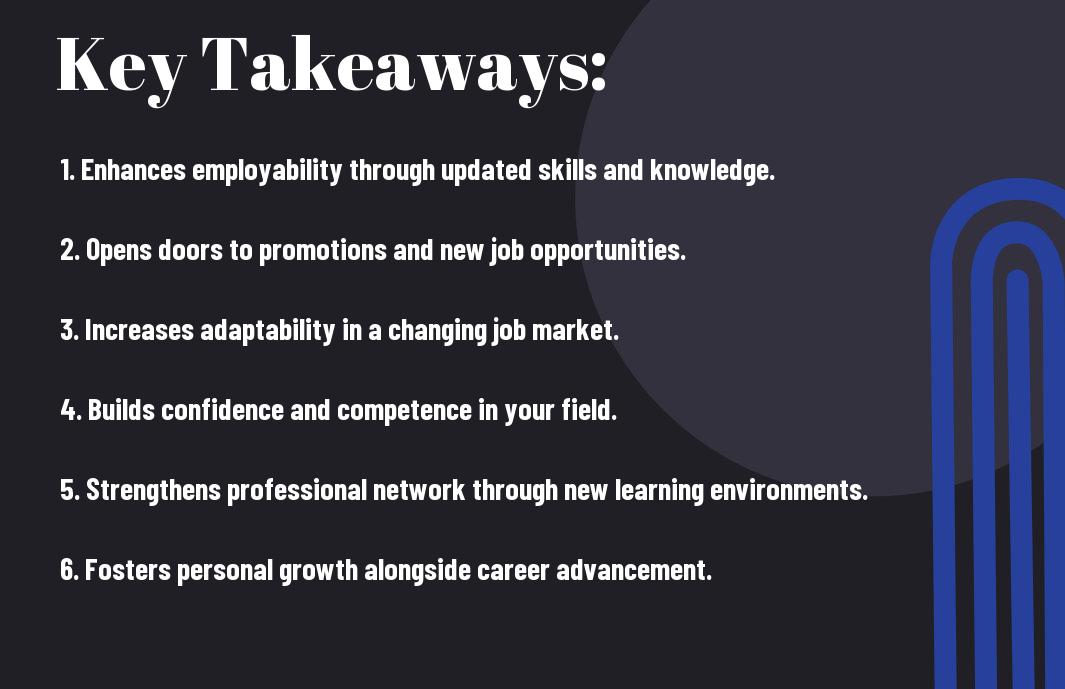
Key Takeaways:
- Upskilling enhances your knowledge and expertise, making you more valuable to employers.
- Continuous learning opens doors to new opportunities and career advancements.
- Staying current with industry trends through upskilling can increase your job security.
- Networking with peers in upskilling programs expands professional connections and potential collaborations.
- Demonstrating a commitment to personal and professional growth can lead to promotions and salary increases.
Understanding Upskilling
While navigating today’s fast-paced job market, upskilling has become an necessary component for career advancement. This ongoing process of acquiring new skills or enhancing existing ones is key to staying relevant and competitive. By investing in your development, you can adapt to changing industry demands and elevate your professional profile.
Definition of Upskilling
Any effort you make to learn new skills or improve your current abilities can be categorized as upskilling. This may involve formal courses, workshops, or self-directed learning that enhance your competencies, enabling you to tackle new challenges in your career.
Importance in the Modern Workforce
On a global scale, the modern workforce is increasingly shifting towards automation and digital transformation, making upskilling a top priority for professionals. You must evolve with these changes to enhance your employability and increase your potential for promotions or career transitions.
Upskilling is not just about keeping pace; it’s about seizing opportunities for advancement. As industries innovate, skillsets that were once sufficient may no longer be adequate. By committing to continual learning, you position yourself as a proactive candidate who can adapt and thrive, making you invaluable to current and prospective employers.
Benefits of Upskilling
Some of the key benefits of upskilling include enhanced employability, increased earning potential, and personal growth. By continually improving your skill set, you not only make yourself a more attractive candidate in the job market but also position yourself for advancement within your current organization. These benefits collectively contribute to a more fulfilling and successful career.
Enhancing Employability
Around 80% of employers consider skills to be an crucial factor when hiring. By upskilling, you increase your adaptability to industry changes, making you a more appealing candidate. Enhanced employability will give you confidence and open doors to various job opportunities that align with your career aspirations.
Increasing Earning Potential
Potential earnings are often linked to your skill set. The more you invest in improving your skills, the higher your value in the job market. This can lead to promotions and salary increases, allowing you to achieve greater financial stability and a better quality of life.
To further capitalize on increased earning potential, consider focusing on skills that are in high demand within your industry. Whether it’s mastering new technologies or acquiring leadership capabilities, these skills can significantly enhance your value to employers. As you gain expertise, you are likely to negotiate better salaries and benefit packages, ultimately resulting in higher financial rewards throughout your career.
Steps to Identify Skills for Upskilling
Your journey to effective upskilling begins with identifying the gaps in your current skill set. By understanding what skills are relevant to your career goals, you can create a focused plan for improvement. Start by analyzing your strengths and weaknesses, then consider the skills that are increasingly becoming crucial in your industry. This approach will guide you on your upskilling path, ensuring that your efforts contribute significantly to your career growth.
Self-Assessment Techniques
Across various methodologies, self-assessment techniques can help you uncover your skill gaps. Tools such as SWOT analysis (strengths, weaknesses, opportunities, threats) can provide a structured framework for evaluating your competencies. You might also consider reflecting on feedback from peers or performance reviews, as these insights can highlight areas for improvement. Ultimately, self-assessment allows you to take ownership of your growth, leading to more targeted learning opportunities.
Market Research on In-Demand Skills
Upskilling involves not only personal reflection but also understanding market trends. To effectively grow in your career, you must stay informed about the skills currently in demand within your industry. Research job postings, consult industry reports, and engage with professional networks to identify emerging skill sets that align with your career aspirations. This knowledge empowers you to focus your learning efforts on skills that enhance your employability and professional relevance.
Skills that are in high demand can vary by industry and location. Familiarize yourself with resources such as LinkedIn Learning, Glassdoor, or industry-specific forums to find valuable insights. Additionally, network with professionals in your field to gain firsthand knowledge of the skills they find crucial. By prioritizing skills that align with market needs, you not only enhance your competencies but also significantly improve your career prospects.
Effective Upskilling Methods
For enhancing your skill set, exploring diverse upskilling methods is vital. Various approaches cater to different learning styles and professional needs, allowing you to choose what works best for you. Combining different methods can maximize efficiency and retention, ultimately helping you achieve your career advancement goals.
Online Learning Platforms
To broaden your expertise, online learning platforms offer a flexible and convenient way to develop new skills. With a plethora of courses available, you have the opportunity to learn at your own pace and focus on the subjects that will benefit your career the most.
Workshops and Formal Education
Online workshops and formal education provide structured opportunities to deepen your knowledge and practice new skills in a collaborative environment. You can engage with instructors and peers, which enriches the learning experience through instant feedback and shared insights.
Learning through workshops and formal education allows you to gain a comprehensive understanding of your field while also networking with other professionals. These experiences enable you to apply theoretical knowledge through practical assignments and group activities, fostering a hands-on approach. Additionally, such settings often encourage collaboration, helping you build valuable connections that can further your career. Investing time in these educational environments can lead to not only skill enhancement but also a more robust professional network.

Creating a Personal Upskilling Plan
Unlike a vague ambition, a personal upskilling plan provides you with a structured approach to your career development. By outlining specific skills you want to acquire and the steps needed to achieve them, you can ensure that your efforts are targeted and effective. This plan acts as a roadmap, guiding you toward your career goals while allowing you to adapt as needed.
Setting Realistic Goals
Plan your goals by identifying what skills are most relevant to your career aspirations and set achievable milestones. Consider the time and resources you have available, ensuring that your goals are not only attainable but also measurable. This way, you can maintain motivation and track your progress effectively.
Tracking Progress and Adjustments
With regular review, you can assess how well you are meeting your upskilling goals and make necessary adjustments. Keep a journal or digital log to note your achievements and any challenges you may encounter, ensuring that you remain aware of your progress.
Indeed, tracking your progress allows you to celebrate small victories and learn from setbacks. Evaluating your plan regularly lets you identify areas for improvement and adapt your approach when required. Engaging with mentors or peers for feedback can further enhance your learning experience, ensuring that you stay on course toward your career advancement.
Real-World Examples of Successful Upskilling
Once again, the impact of upskilling on career advancement is evident through various success stories. These real-world examples showcase how individuals leveraged new skills to not only improve their job performance but also to find new roles and increased responsibilities, ultimately leading to enhanced career growth.
Case Studies of Professionals
Along with theoretical knowledge, practical examples solidify the concept of upskilling. Here are some compelling case studies of professionals who transformed their careers:
- John, a marketing specialist, took a digital marketing course, resulting in a 35% increase in his conversion rates over six months.
- Lisa, an IT technician, learned cloud computing, which led to a promotion and a 20% salary hike.
- Mark, a project manager, completed a leadership program, enhancing his team’s efficiency by 40% in project delivery.
Industry-Specific Success Stories
Among the many sectors that benefit from upskilling, certain industries stand out for their impressive outcomes. Companies in technology, healthcare, and finance have reported significant gains from investing in their employees’ development. Upskilling initiatives have led to higher employee retention and performance levels, illustrating a direct link between continuous learning and success in these fast-paced environments.
Indeed, industry-specific success stories highlight how tailored upskilling programs can lead to remarkable results. For instance, in healthcare, nurses who undertook advanced training saw improved patient outcomes and higher job satisfaction. In finance, professionals who learned data analytics skills reported more accurate forecasting, driving strategic decisions. Such examples demonstrate that the right upskilling efforts not only benefit individual careers but also positively impact entire industries.
Conclusion
Ultimately, upskilling empowers you to stay competitive and relevant in your field, opening doors to new opportunities and career advancement. By continuously enhancing your skills, you increase your value to employers and position yourself for promotions or new roles. Embracing lifelong learning not only boosts your confidence but also solidifies your place in an ever-evolving job market. Investing in your skillset is a strategic move that can significantly shape your professional journey and ensure sustained growth in your career.
FAQ
Q: What is upskilling and how can it help my career?
A: Upskilling refers to the process of learning new skills or enhancing existing ones to stay relevant in a constantly evolving job market. By acquiring new competencies, you become more valuable to your current employer or more attractive to potential employers. This can lead to promotions, salary increases, or even better job opportunities in different organizations or industries.
Q: How does upskilling improve my job performance?
A: By learning new tools, technologies, and methodologies specific to your field, you can perform your tasks with greater efficiency and effectiveness. Upskilling allows you to take on more complex projects and responsibilities, which not only enhances your work performance but also positions you as a key resource within your team or company. This translated competency often leads to recognition and career advancement.
Q: Can upskilling open new career paths for me?
A: Yes, upskilling can provide you with the versatility required to transition into different roles or industries. For instance, if you are currently in a marketing position and learn data analytics, you could move into a specialized data-driven role, thus broadening your career options. Diversifying your skill set prepares you for emerging opportunities and can help you pivot smoothly when pursuing a new direction.
Q: How often should I focus on upskilling?
A: The frequency of upskilling depends on your industry and the pace of change within it. Regularly assessing your skills and identifying gaps can guide your learning journey. Setting aside time annually or biannually to engage in professional development—through workshops, online courses, or industry conferences—can greatly contribute to ongoing growth and career mobility.
Q: What resources are available for upskilling?
A: There are numerous resources available for upskilling, including online courses (such as Coursera, Udemy, or LinkedIn Learning), industry-specific certifications, mentorship programs, and networking events. Additionally, many companies offer internal training programs to support employee development. Exploring these options can help you find the right fit to enhance your skill set effectively.