
It’s an exciting time to consider a career in cybersecurity, as the demand for skilled professionals continues to surge. With the increasing number of cyber threats, organizations are seeking talented individuals like you to protect their data and systems. In this post, you’ll discover nine expert tips that will help you navigate the complex landscape of cybersecurity, from education and certifications to networking and hands-on experience. By following these guidelines, you’ll be on your way to establishing a successful career in this dynamic field.
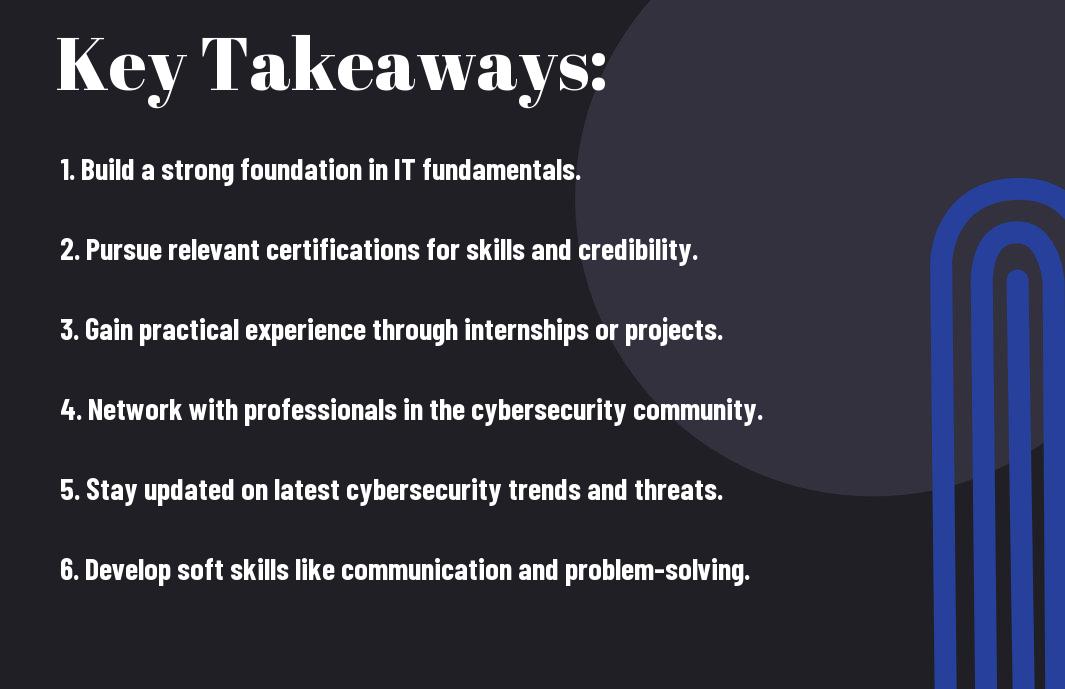
Key Takeaways:
- Gain foundational knowledge in IT and networking to understand the basics of cybersecurity.
- Obtain relevant certifications such as CompTIA Security+ or Certified Ethical Hacker to boost your credentials.
- Engage in hands-on practice through labs or simulations to develop practical skills.
- Network with professionals in the field to gain insights and find mentorship opportunities.
- Stay updated on the latest cybersecurity trends and threats to remain competitive in the job market.
Understanding Cybersecurity
While entering the field of cybersecurity, it’s necessary to grasp its foundational principles. This dynamic field encompasses a variety of practices designed to protect systems, networks, and data from cyber threats. As you explore cybersecurity, you’ll find a blend of technology, strategy, and policy that works together to create secure environments, making it a vital component of modern businesses and institutions.
Key Components of Cybersecurity
Understanding the key components of cybersecurity is vital for your success. These components include risk management, threat identification, and incident response, which together create a comprehensive security framework. With a solid grasp of these fundamental elements, you will be better equipped to tackle the challenges in safeguarding sensitive information and mitigating potential risks.
Common Career Paths
About the career paths in cyber security, there are various options available to suit your skills and interests. Roles such as security analyst, penetration tester, and information security manager present unique challenges and opportunities for growth. Exploring these positions will help you align your passion with a fulfilling career, leading to significant contributions in protecting digital assets.
Cybersecurity offers diverse career paths, allowing you to specialize in areas that ignite your passion. For instance, as a security analyst, you will monitor systems for threats, while a penetration tester focuses on discovering vulnerabilities by simulating cyber-attacks. Additionally, information security managers oversee the implementation of security measures and strategies within organizations. By evaluating these roles, you can identify what resonates with your strengths and aspirations, paving the way for a rewarding career in this field.
Essential Skills for Cybersecurity Professionals
Even as a beginner in cybersecurity, developing a robust skill set is vital to your success in this rapidly evolving field. You will need a blend of technical knowledge and soft skills to effectively protect organizations from cyber threats. By honing these skills, you set yourself up for a rewarding career while contributing to a safer digital landscape.
Technical Skills
Technical skills are fundamental in cybersecurity, as they encompass a wide array of knowledge areas such as networking, operating systems, and encryption technologies. Familiarizing yourself with programming languages, security protocols, and analytical tools will enable you to understand vulnerabilities and devise effective solutions. Staying current with cybersecurity trends and practices will further enhance your technical capabilities.
Soft Skills
Between technical prowess and expertise, soft skills play a significant role in your effectiveness as a cybersecurity professional. Strong communication skills allow you to convey complex information to non-technical stakeholders, enabling better collaboration and understanding of security measures. Problem-solving abilities help you address issues efficiently, while attention to detail ensures you do not overlook critical vulnerabilities. Adaptability is just as important, as the cyber landscape is always changing, requiring you to stay flexible and open to learning.
Essential soft skills also include teamwork and patience, which are necessary to navigate the challenges of working with diverse teams and addressing security incidents. You’ll often collaborate with various departments, making the ability to work well with others a key asset. Fostering empathy allows you to appreciate different perspectives, ultimately aiding in crafting comprehensive security solutions that address the needs of your organization. As you develop these skills, you will find yourself better equipped to excel in the diverse environments of cybersecurity.
Educational Paths and Certifications
For aspiring cybersecurity professionals, choosing the right educational path and certifications can greatly enhance your career prospects. A solid foundation in relevant disciplines, combined with recognized certifications, positions you for success in this highly competitive field.
Degree Programs
Among the key educational paths, pursuing a degree in computer science, information technology, or cybersecurity is beneficial. These programs provide you with vital knowledge of networks, programming, and security principles, laying a strong groundwork for your future endeavors in the industry.
Notable Certifications
One effective way to elevate your qualifications is by obtaining notable certifications in cybersecurity. These credentials not only demonstrate your expertise but also signal to employers that you are serious about your career development.
It is important to consider certifications like CompTIA Security+, Certified Ethical Hacker (CEH), and Certified Information Systems Security Professional (CISSP), as they are widely recognized in the industry. These certifications cover various aspects of cybersecurity, from foundational knowledge to advanced security strategies, and can greatly enhance your credibility and employability in this dynamic field.

Gaining Practical Experience
Despite the theoretical knowledge you’ve acquired, practical experience is crucial for a successful career in cybersecurity. Engaging in real-world applications allows you to strengthen your skills and understand the intricacies of the field. By actively seeking opportunities to apply what you’ve learned, you can significantly enhance your employability and confidence.
Internships and Entry-Level Positions
Positions such as internships and entry-level jobs serve as valuable stepping stones into the cybersecurity world. These opportunities not only help you apply your classroom knowledge but also expose you to the day-to-day operations of security teams. Even entry-level roles can hold significant responsibilities and provide insights into industry practices.
Hands-On Projects
Above all, engaging in hands-on projects can greatly enhance your learning experience. By working on practical cybersecurity challenges, you develop problem-solving skills and gain familiarity with tools commonly used in the field.
Gaining practical experience through hands-on projects allows you to explore different aspects of cybersecurity. You might consider setting up a home lab, participating in Capture the Flag (CTF) competitions, or contributing to open-source projects. These activities enable you to experiment with various technologies and methodologies in a low-risk environment, preparing you for real-world scenarios. By documenting your progress and solutions, you also create a portfolio that showcases your abilities to potential employers.
Networking in Cybersecurity
Unlike many traditional fields, networking in cybersecurity is imperative for expanding your knowledge and connecting with industry professionals. Engaging with others in the field can open doors to job opportunities, mentorship, and valuable insights into emerging trends and practices. By attending conferences, participating in online forums, or leveraging social media platforms, you can build a network that serves as a strong foundation for your career growth.
Building Professional Relationships
On your journey in cybersecurity, establishing professional relationships is key. You should actively seek opportunities to connect with mentors, peers, and industry leaders who can guide you and share their experiences. One way to do this is through informational interviews, where you can learn about their career paths and gain insights into the skills that are in demand.
Joining Cybersecurity Communities
By becoming part of cybersecurity communities, you can enhance your knowledge and connect with like-minded individuals. These groups often offer resources, forums, and events tailored to your interests, helping you stay up-to-date with the latest developments in the field. Whether you choose to join online platforms like LinkedIn groups or local meetups, these interactions can lead to lasting relationships and new opportunities.
Cybersecurity communities are invaluable for fostering collaboration and learning among professionals in the industry. They provide a space for you to ask questions, share experiences, and discover best practices. Engaging with these groups not only enhances your technical knowledge but also helps you build your professional reputation, increasing your visibility among potential employers. Joining these communities can be a proactive step toward a successful career in cybersecurity.
Staying Current in the Field
Once again, the cybersecurity landscape is constantly evolving, making it important for you to stay informed about the newest technologies, threats, and strategies. Engaging with ongoing education, networking opportunities, and current events will keep your skills relevant and ensure that you are well-equipped to tackle emerging challenges in the field.
Continuous Learning
With abundant resources available, continuous learning is a vital part of your professional development. Online courses, webinars, and certifications can enhance your knowledge and skills, ensuring you remain competitive in the ever-changing realm of cybersecurity.
Follow Industry Trends
Before stepping into the workforce, it’s important to keep up with the trends that shape the cybersecurity sector. Subscribing to industry news, following reputed blogs, and participating in forums can provide valuable insights into the latest developments and methodologies.
Trends in cybersecurity can shift rapidly, influenced by new threats, technological advancements, and regulatory changes. By staying informed about these trends, you can anticipate shifts that may impact your work or the industry at large. Engaging with thought leaders on social media and attending relevant conferences will help you understand the direction the field is taking, allowing you to adapt and innovate in your role effectively.
Conclusion
Conclusively, commenceing on a cybersecurity career requires a blend of skills, continuous learning, and proactive networking. By following the nine expert tips provided, you can build a solid foundation and expand your opportunities in this dynamic field. Focus on gaining relevant certifications, engaging with the community, and staying updated on industry developments to enhance your expertise. Your commitment to personal growth and adaptability will play a significant role in your success, positioning you as a sought-after professional in the cybersecurity landscape.
FAQ
Q: What educational background is recommended for a career in cybersecurity?
A: While a degree in computer science, information technology, or a related field can be beneficial, it is not strictly required. Many professionals enter this field through various pathways, including certifications, boot camps, or self-study. Relevant experience with networking, programming, or systems administration can also provide a strong foundation for a successful career in cybersecurity.
Q: What certifications should beginners consider to improve their credentials in cybersecurity?
A: Beginners may find value in certifications such as CompTIA Security+, Certified Ethical Hacker (CEH), or Systems Security Certified Practitioner (SSCP). These certifications validate foundational knowledge and skills in cybersecurity concepts, threats, and protective measures. Conducting research on specific industry requirements can help inform which certifications will be most beneficial.
Q: How can I gain practical experience in cybersecurity if I’m just starting out?
A: Engaging in internships, volunteer work, or entry-level positions in IT can provide valuable hands-on experience. Participating in cybersecurity competitions, such as Capture the Flag (CTF) events or joining online labs like TryHackMe or Hack The Box, can also help beginners enhance their skills in a controlled environment while building a strong portfolio.
Q: What skills are most sought after in the cybersecurity field?
A: Key skills in demand include strong analytical and problem-solving abilities, knowledge of security protocols and technologies (such as firewalls and intrusion detection systems), familiarity with networking concepts, and programming skills. Additionally, soft skills such as communication and teamwork are important, as cybersecurity professionals often work in collaboration with other departments and must convey complex information in an understandable way.
Q: What are some potential career paths within the cybersecurity field?
A: The cybersecurity field offers various career paths, including but not limited to roles such as security analyst, penetration tester, incident responder, security architect, and compliance officer. Each role requires a unique set of skills and expertise, allowing individuals to specialize and focus their careers based on their interests and strengths within the cybersecurity domain.